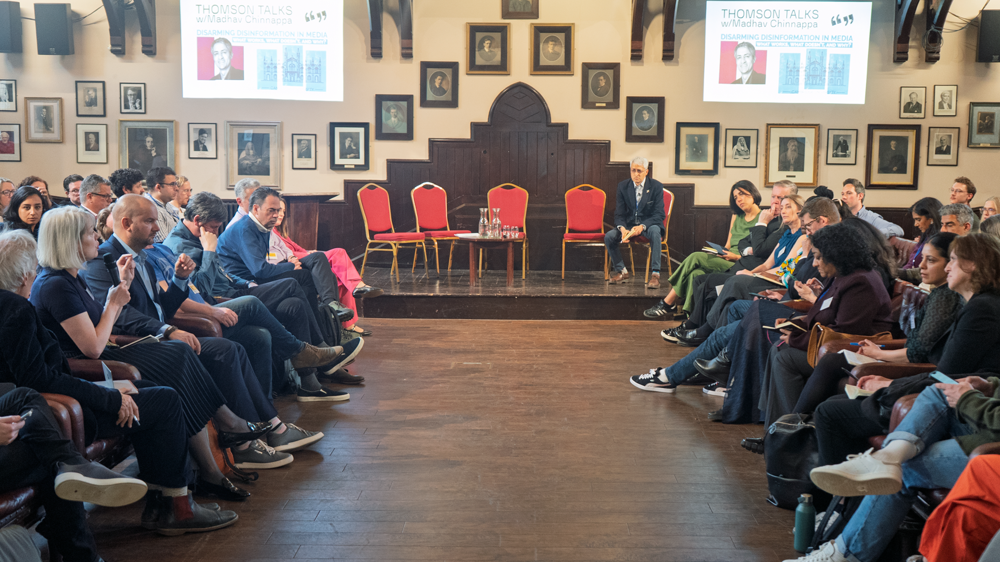
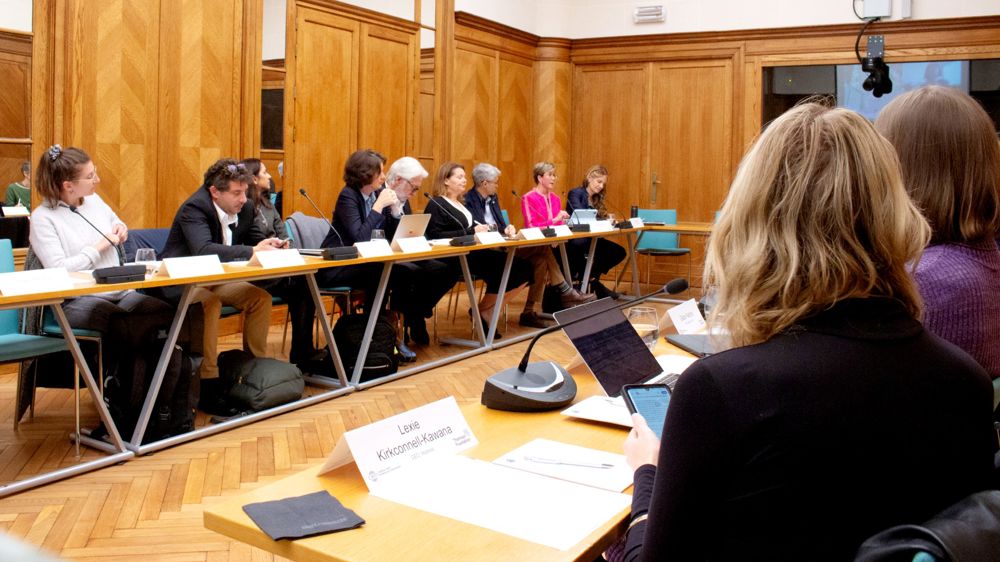
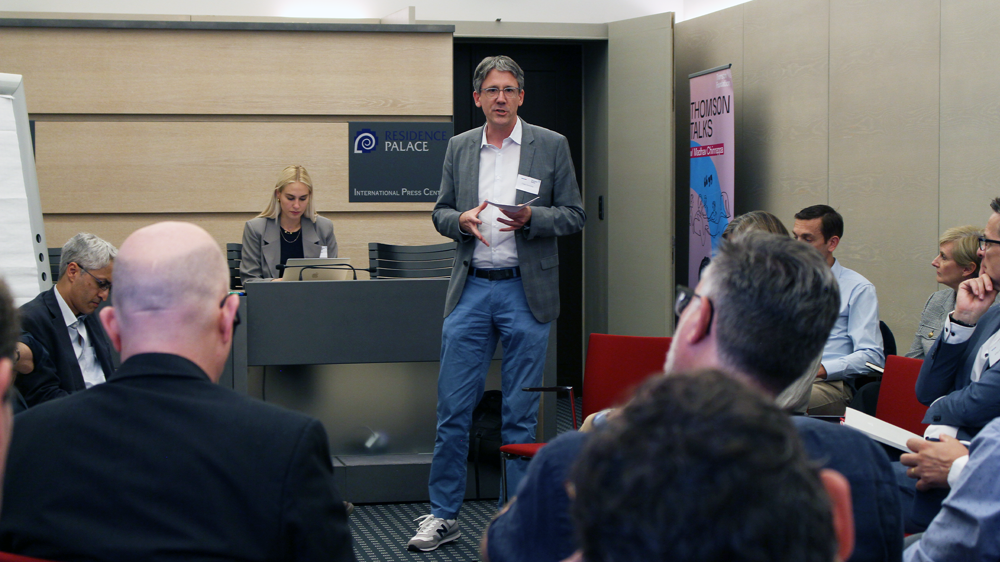
Experts from the world of academia, tech, business, politics and media convened for a Thomson Talks at the Cambridge Disinformation Summit in April. It’s the second time we’ve been invited to host the discussion forum in the world-famous Cambridge Union debating chamber.
The event was held under the Chatham House Rule, so where someone is named, it is with their explicit permission.
Put 60 of the smartest thinkers into a room and give them 90 minutes to find the holy grail of the digital age: effective responses to disinformation. The results are distilled in a newly released report Effective Responses to Information Manipulation: Lessons from Fragile Contexts. As the report reveals, this compelling, thought-provoking Thomson Talks session came up with some radical, scalable and replicable potential solutions.
Moderated by Eliza Anyangwe, the editor-in-chief of the Fuller Project, the discussion took the ‘fragile context’ of the crisis in Sudan as its starting point. What is now the world’s largest humanitarian disaster is used as a testing ground for those spreading disinformation.
‘Information is aid’
Participants heard that in Sudan, 12 million people have been forcibly displaced, including journalists. Disinformers have filled the information vacuum, spreading it primarily on social platforms and WhatsApp. That disinformation ‘can be a matter of life and death’ as it impacts the direction people flee from violence or seek food and shelter. For those people, ‘information is aid’.
Amgad Abdelgadir, a multimedia journalist from Dabanga, a Sudanese news outlet in exile, spoke about how they are using shortwave radio to provide that life-saving information; it’s also cheap and accessible for audiences and hard to jam for information manipulators. “In this environment, journalism isn’t just about reporting facts, it’s about rebuilding trust,” he said. “When information is weaponised, credible journalism becomes a form of protection.”
When information is weaponised, credible journalism becomes a form of protection.
What do effective interventions look like?
Recommendations from participants on effective interventions reflect the wide range of first-hand experience in the room from those who have lived or worked in ‘fragile contexts’, and a belief no organisation can counter this global problem alone.
They include:
- Organisations more willing to collaborate and share best practice
- More locally constructed solutions: talking to people in their own language on the platforms they use through people they trust
- More effective public education, ‘vaccinating our next generation of citizens’ to build resilience against disinformation
The overarching aim is for a common framework that cuts across media, civil society, education, politics, tech and business defining ‘what good looks like’ making it easier to show if and how certain interventions are making a difference.
To find out more about the Thomson Talks session in Cambridge, you can read the full report here.